
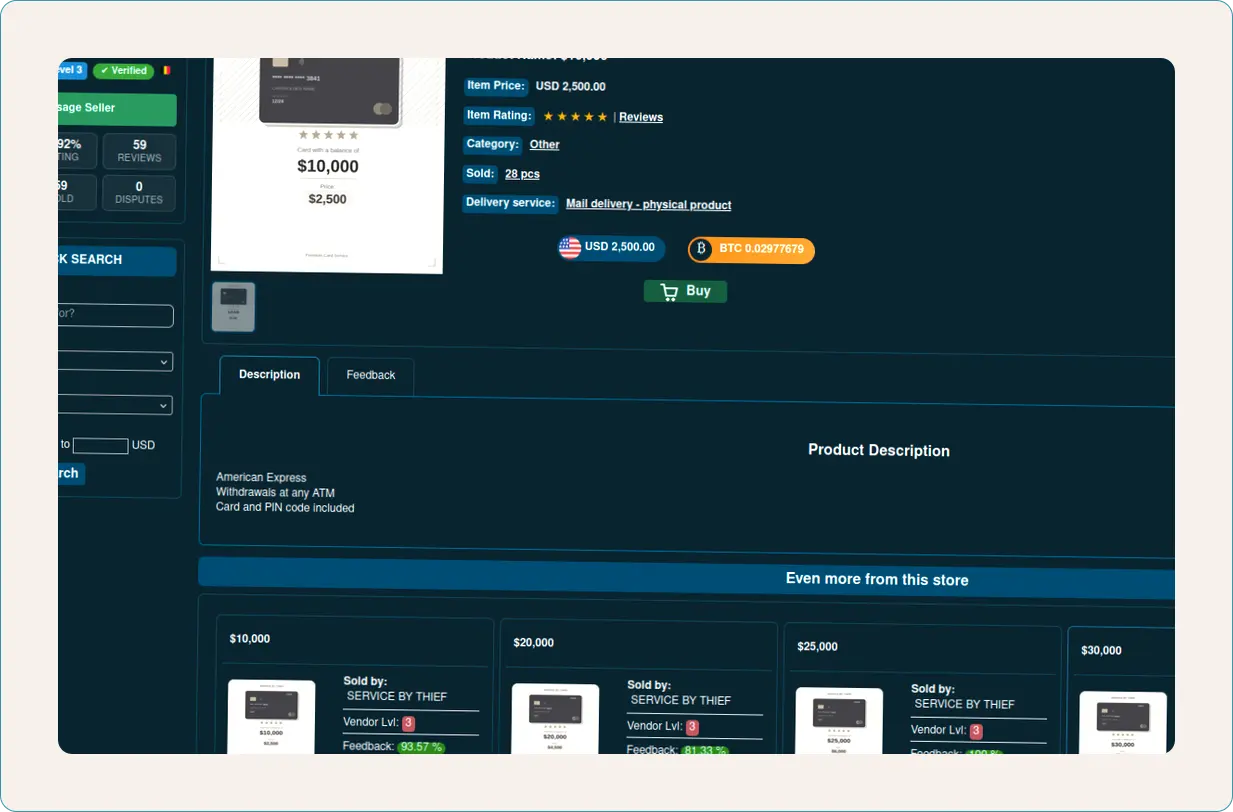
Darknet marketplaces openly advertise cloned card services with pricing and delivery options
Sections
- The Carding Chain: How Cloned Cards Reach Buyers
- What ATMs Actually Record: The Surveillance You Don't See
- Investigation Timeline: From Fraud Report to Arrest
- The Numbers Behind the Case
- Why Cryptocurrency Anonymity Failed
- Critical Mistakes That Led to Arrest
- Lessons for Security Professionals
- The Sentence and Its Implications
- The Real Cost of Cloned Cards
Mark T., 34, believed he had found an easy profit scheme when he purchased cloned cards with PIN codes on the dark web. The first three ATMs yielded $4,200 in cash without incident. The fourth machine, however, became the point where his digital anonymity collapsed into physical evidence.
This case illustrates how modern banking security infrastructure transforms every ATM into a surveillance and evidence collection device. What appeared to be an anonymous transaction on a darknet marketplace ended in a federal prison sentence because of a chain of evidence that stretched from cryptocurrency exchanges to facial recognition databases.
For those researching identification security and fraud prevention, this case demonstrates how physical and digital forensics converge. The story is not about encouraging illegal activity—it is about understanding how security systems detect and prosecute card fraud in the real world.
What matters
ATM cameras record faces at 1080p resolution and create permanent evidence that links digital crimes to physical identities within days
Cryptocurrency purchased through KYC exchanges can be traced back to buyers through court orders, eliminating anonymity at the entry point
Anti-fraud systems automatically detect withdrawal patterns and trigger investigations before fraudsters complete their cash-out operations
Physical evidence like cards, MSR devices, and cash denominations provide prosecutors with direct proof that survives any digital anonymity measures
The fifteen-day timeline from first withdrawal to arrest demonstrates how rapidly modern banking security identifies and prosecutes card fraud
The Carding Chain: How Cloned Cards Reach Buyers
Carding represents one of the oldest forms of financial cybercrime. The process Mark participated in follows a consistent pattern that security professionals track across multiple jurisdictions.
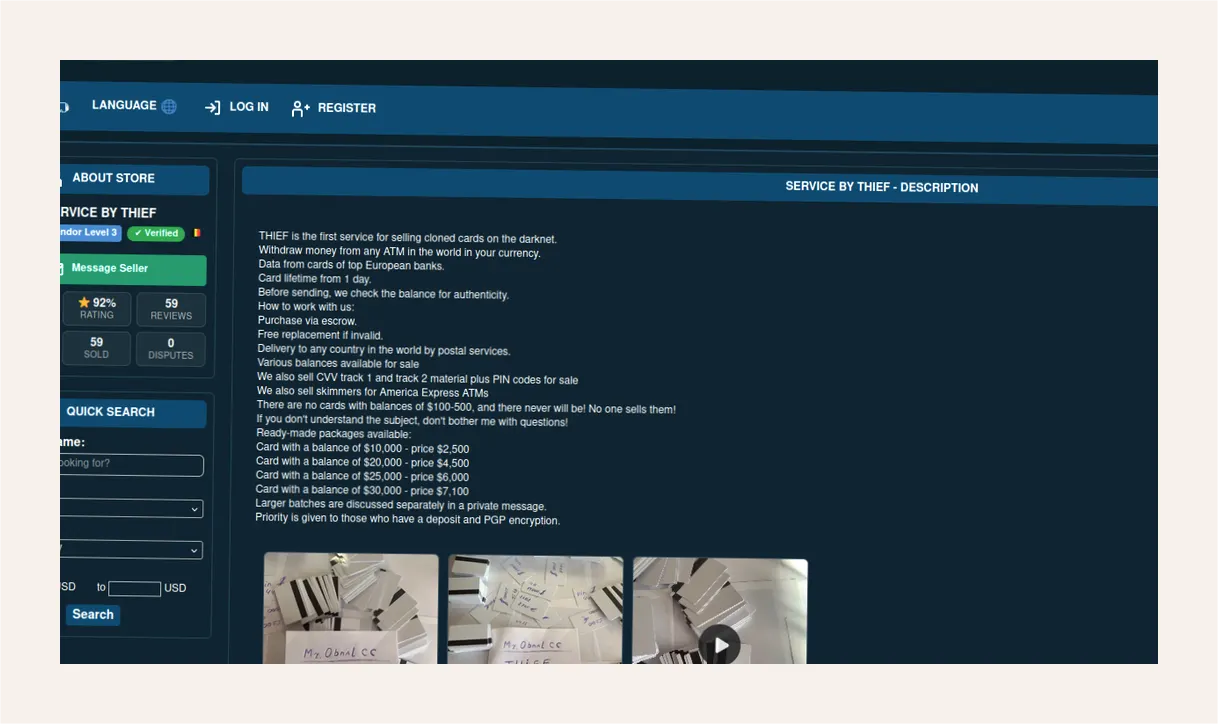
The process starts with gathering data. Criminals acquire magnetic stripe information (track 1 and track 2) using physical skimmers attached to ATMs, shimmer devices placed within card readers, data breaches at stores, or by purchasing from dumps vendors on darknet markets. It has become crucial for consumers to recognize how to identify a card reader that has a skimmer—visible indicators include loose or misaligned card slots, unusual thickness around the insertion area, and mismatched colors on ATM parts. Security-aware individuals frequently look for images of ATM skimmers online to become acquainted with the appearance of these devices in reality.
After data collection, the next step is embossing. Stolen magnetic tracks are imprinted onto blank plastic cards using magnetic stripe reader-writer devices (MSR). Names, expiration dates, and card numbers are then embossed onto the cards to enhance their authenticity. If PIN codes were captured through overlay keypads or hidden cameras, the buyer possesses a complete set for cash withdrawal.
The cash-out phase marks the transition from online crime to tangible theft. Criminals withdraw cash from ATMs before victims can detect unauthorized transactions and alert their banks. Transforming cash into cryptocurrency occurs during the final stage, where Bitcoin ATMs or peer-to-peer exchanges are utilized to obscure the financial trail.
Mark acquired his cards from a marketplace that is only accessible through Tor. He made the payment using Monero, chosen for its difficulty to trace. The cards were delivered in unmarked packaging through the mail. Everything seemed to indicate a successful anonymous transaction. However, systems designed to protect against card skimming and investigative techniques have advanced significantly beyond what most buyers comprehend.
What ATMs Actually Record: The Surveillance You Don't See
ATMs have evolved into advanced tools for data collection. Each operation yields valuable information that can be scrutinized by law enforcement.
These devices often feature cameras aimed at the user, capable of recording in high definition at a resolution of 1080p. They operate effectively even in low-light settings. Some versions include hidden cameras installed at strategic angles, which remain operational continuously, not merely during transactions.
Digital logs carefully document every engagement. The records capture important details such as the exact time, the amount of cash dispensed, the card number, the ATM's unique ID, and the outcome of the transaction. In addition, geolocation technology records the machine's coordinates with every log entry. Communication logs monitor all interactions with the bank's processing system, providing comprehensive oversight.
In one case, Mark used the fourth ATM situated in a suburb of Tampa Bay. The surveillance footage captured a clear image of his face, without any disguise. He withdrew $700, completing the transaction in just twenty-three seconds. This video evidence proved vital during the subsequent investigation.
Many people mistakenly assume that their anonymity on the darknet carries over into the physical realm. This belief is incorrect, especially since digital crimes typically require real-world actions. An ATM serves as the boundary where anonymity fades and identification begins. Financial institutions leverage these surveillance capabilities to prevent skimming and to compile evidence for fraud cases.
Investigation Timeline: From Fraud Report to Arrest
The investigation progressed in a structured way, highlighting the effectiveness of modern fraud detection systems in identifying culprits.
Unauthorized withdrawals were reported to banks on Day 1 (November 2024) from individuals located in Florida, Georgia, and North Carolina. Swift action was taken by their banks to block the compromised cards and to trigger alerts in the fraud detection systems after unauthorized withdrawals were reported.
Day 3: Sophisticated algorithms created to flag fraudulent transactions detected a sequence of rapid withdrawals linked to cloned cards used in various states almost simultaneously. This led the bank’s fraud investigation team to take over the case.
Day 5: The inquiry was elevated to the U.S. Secret Service, which focuses on financial crimes. An analyst from this agency sought transaction records and surveillance footage from the ATMs involved.
Day 8: A clear image of a suspect was captured in the footage from the fourth ATM. The identification of Mark T., who had no prior criminal history, resulted from cross-referencing a clear image of a suspect obtained from ATM footage with state records. It was determined that his home was located within a 40-mile radius of all the ATMs from which withdrawals were made.
On Day 12, a warrant was obtained by law enforcement to examine digital evidence, which included browsing histories, records from the Internet Service Provider, and activities related to cryptocurrency wallets. Visits to Tor exit nodes were indicated by data from the ISP, coinciding with the timing of purchases made from a darknet marketplace. A court order connected Mark's Monero wallet to an account associated with this illegal site.
On Day 14, authorities executed a search warrant at Mark's residence, where they discovered a laptop containing evidence of illicit activities, six blank plastic cards, a magnetic stripe read-write device, $3,200 in cash, and packaging materials related to the card shipment.
After his arrest on Day 15, Mark confessed to having cashed out four of the cloned cards he acquired, noting that the bank had blocked the other two prior to any attempts at using them.
The suspect was captured within a 15-day period due to the rapid responses of fraud detection systems and law enforcement, as illustrated in this investigation timeline.
The Numbers Behind the Case
The financial and legal repercussions of Mark's actions resulted in a significant cost-benefit analysis.
| Category | Amount/Detail |
|---|---|
| 4 withdrawals occurred. | |
| Withdrawals amounting to $4,900 were made. | |
| Cloned cards incur a cost of $480. | |
| The period from the withdrawal to the arrest lasted 15 days. | |
| Federal prison sentence | 60 months (5 years) |
| As both a fine and restitution, the amount of $22,000 was imposed. | |
| A period of 3 years has been designated for supervised release. |
A five-year prison sentence and financial penalties totaling $22,000 resulted from a profit margin that reached $4,420 before laundering. This total does not encompass legal fees, job loss, or the enduring federal felony record.
Discussions about card skimming frequently appear in Reddit threads and dark web carding forums, where users weigh the risks against the potential rewards. Court records consistently reveal that the dangers involved far outweigh any fleeting financial benefits. Conversations about cloned cards on Reddit often cite Mark's situation as a warning about how swiftly law enforcement can connect physical evidence to purchasers.
Why Cryptocurrency Anonymity Failed
Mark selected Monero due to its reputation for strong privacy. However, law enforcement managed to construct a solid chain of evidence linking him to the transaction.
The primary issue arose from how he obtained the cryptocurrency. Mark chose a centralized exchange that necessitated KYC (Know Your Customer) compliance, which required him to present a passport and a selfie during the account registration. A legal directive led the exchange to disclose his identity and full transaction history.
Even though Monero's blockchain provides some level of anonymity, the recorded acquisition on a particular date and for a specific amount acted as circumstantial evidence against him. Key activities occurred over a short timeframe; the purchase of Monero, transactions on the marketplace, receipts from card transactions, and withdrawals from ATMs all took place within a two-week period. This clustering of events significantly bolstered the prosecution’s argument.
Moreover, tangible evidence supported the allegations against him. The counterfeit cards discovered by investigators contained magnetic stripe data associated with three real victims, creating a direct link that no cryptocurrency protocol could obscure.
In addition, surveillance footage from an ATM provided undeniable identification of Mark. Even if all other aspects of his security measures had been flawless, this evidence would have tied him to the crime scene. This situation highlights how technology designed to identify credit card skimmers can inadvertently reveal the identities of individuals involved in fraudulent activities.
While cryptocurrency can offer a certain degree of transaction privacy on the blockchain, it does not ensure anonymity when digital transactions intersect with the physical world. The enforcement of KYC protocols by exchanges, along with IP address tracking and the gathering of physical evidence, are crucial aspects where anonymity fails.
The Monero wallet was linked to an account on the website where the purchase was made through a court order served to the exchange where Mark initially bought Monero.
Critical Mistakes That Led to Arrest
Mark's security measures were compromised by several significant errors that law enforcement was able to exploit. While each mistake had the potential to raise concerns individually, together they created a compelling case against him.
Geographical limitations: The four ATM cash withdrawals occurred within a 40-mile distance from his home. Fraud detection systems often highlight such trends as potential signs of fraudulent activity. The proximity of these locations is a crucial element that triggers automatic alerts.
Absence of concealment: Mark did not employ any methods to disguise himself, such as wearing a mask or hat, while at the ATMs. His identity was easily recognizable in the recorded footage, allowing authorities to pinpoint him using driver's license records. This oversight made other security measures ineffective.
Centralized exchange transactions: When Mark bought Monero through an exchange that complied with KYC regulations, he unknowingly connected his real identity to the cryptocurrencies used for illegal purposes. This link effectively connected his real-world persona with his online actions related to the darknet.
Storage of incriminating items at home: Retaining blank cards, the MSR reading device, and a laptop that contained browsing history at his residence provided investigators with concrete evidence. Digital forensic techniques can often recover information even after attempts to erase it; the Tor Browser may leave identifiable traces, and operating system update logs can disclose usage patterns.
Cash discovered during the search: The $3,200 found during the police investigation matched the denominations from the ATMs he had visited. Although this detail may seem minor, it reinforced the prosecution's timeline and substantiated the charges of money laundering.
Rapid transaction sequence: Mark executed all his transactions in just two weeks, which triggered an immediate reaction from fraud detection systems. A longer duration between transactions could have resulted in slower detection, but eventually, the footage would have still revealed his identity.
These common oversights are frequently seen in new offenders who misunderstand security protocols and mistakenly believe they can remain anonymous. Analysts studying fraud trends consider these errors as typical rather than exceptions. Mark's techniques for card cloning were not advanced, and his overall operational security reflected a lack of sophistication.
Lessons for Security Professionals
Mark's situation offers important lessons for professionals in cybersecurity and fraud prevention. The effectiveness of the investigation relied on various systems collaborating seamlessly.
The initial barrier against fraud comes from anti-fraud systems. These systems utilize methods such as pattern recognition, geolocation criteria, and scoring frameworks, which function automatically prior to any human analysis. There is a strong case for banks to enhance their investment in machine learning algorithms for anomaly detection. Such technology can identify fraudulent activities more rapidly than traditional methods that depend on manual monitoring.
It is crucial for both digital and physical forensic efforts to be unified. In this instance, the video footage from the ATM proved to be vital for identification, but it required the accompanying digital transaction logs to pinpoint the relevant timestamps. The merger of these two types of evidence is critical for effective legal action.
The anonymity associated with cryptocurrencies has significant limitations. The entry and exit points into the cryptocurrency ecosystem, particularly through KYC exchanges for entry and cash or commodities for exit, serve as two critical links connecting the digital and physical realms. Given that regulated exchanges mandate identity verification, achieving total anonymity remains unfeasible for the majority of users.
Educating customers plays a key role in minimizing losses. In this case, the victims were slow to identify the fraudulent activity. When victims report incidents more quickly, banks can block cards sooner, which curtails the potential losses. Programs aimed at educating customers about recognizing signs of card skimming and monitoring their accounts can lead to substantial reductions in risk.
The Sentence and Its Implications
Mark T. admitted guilt in March 2025 concerning fraudulent activities related to access devices as defined in 18 U.S.C. § 1029, and he also faced additional accusations of money laundering as specified in 18 U.S.C. § 1957. The U.S. District Court for the Middle District of Florida imposed a federal prison sentence of 60 months.
Following his incarceration, Mark will undergo a supervised release period that spans three years, during which he will be required to comply with specific conditions. The court also ordered him to pay a total of $22,000 in fines, in addition to restitution to three victims whose accounts were impacted by his illegal activities. This restitution amount is significantly greater than the actual profits he obtained from his crimes, nearly five times his earnings.
During the proceedings, the judge noted that Mark had a minor part in the fraud operation, primarily acting as a purchaser and user instead of being a major supplier or contributor to the illicit scheme. It is commonly observed, however, that those who find themselves on the receiving end of such fraudulent activities face the gravest risks and repercussions. The individuals orchestrating these crimes—like data brokers and skimmers—often manage to escape the scrutiny of law enforcement.
This trend is reflected in numerous other legal cases, where those who withdraw cash directly are prosecuted more frequently than the masterminds behind the schemes. While law enforcement agencies are focused on pursuing these higher-tier offenders, they frequently encounter obstacles related to technical and jurisdictional issues.
Mark's case highlights a vital aspect of contemporary credit card skimming detection methods, which are crucial for identifying and prosecuting even minor fraud cases. The consequences of these unlawful activities extend well beyond immediate financial gains, influencing long-term employment opportunities, civil rights, and personal freedoms long after individuals have completed their sentences.
The Real Cost of Cloned Cards
Mark T.'s case demonstrates that modern banking security infrastructure has evolved beyond what most fraud participants understand. The integration of physical surveillance, digital transaction logging, cryptocurrency tracing, and facial recognition databases creates a comprehensive evidence collection system that operates automatically and efficiently.
The fifteen-day timeline from first withdrawal to arrest illustrates how quickly these systems identify and locate suspects. ATM cameras, anti-fraud algorithms, and law enforcement coordination have made cash-out operations significantly riskier than they appeared a decade ago.
For security professionals, this case reinforces the importance of layered defenses. No single security measure prevented the fraud—Mark successfully purchased cloned cards and made several withdrawals. However, the combination of automated detection, physical evidence collection, and digital forensics ensured rapid identification and prosecution. Understanding these systems helps both in preventing fraud and in educating potential victims about the real risks of participating in carding schemes.